

Market Overview & The Gap and Hold Edge
The global financial markets are currently navigating a complex terrain marked by earnings season, geopolitical tensions, and macroeconomic uncertainties. As investors and traders brace themselves for the upcoming earnings reports, the ‘Gap and Hold’ strategy emerges as a critical tool to navigate these volatility-inducing factors. This strategy, which involves holding positions through significant price gaps that occur during earnings announcements, has gained traction due to its ability to capture momentum continuation and mean reversion patterns in volatile markets.
The market is particularly attuned to earnings reports, as they often serve as a catalyst for sharp price movements. The ‘Gap and Hold’ strategy leverages the concept of overnight earnings gaps, where prices gap up or down at the open based on pre-market sentiment. This approach is especially effective in markets with high momentum and strong technical setups, as it allows participants to capitalize on the continuation of existing trends post-earnings.
From a macroeconomic perspective, the current market environment is characterized by heightened volatility and uncertainty. The Federal Reserve’s tightening monetary policy, geopolitical risks, and sector-specific growth trends are all playing a role in shaping market behavior. As such, participants must remain vigilant, paying close attention to earnings gaps that could drive short-term price movements with significant implications for long-term profitability.
Technical Deep Dive: Target Analysis
The data provided offers insights into three key companies – Jefferies Financial Group Inc. ($JEF), Commercial Metals Company ($CMC), and TD SYNNEX Corporation ($SNX) – with their respective earnings dates, timings, and technical indicators. Each of these stocks presents a unique opportunity for applying the ‘Gap and Hold’ strategy, as well as considerations for risk management.
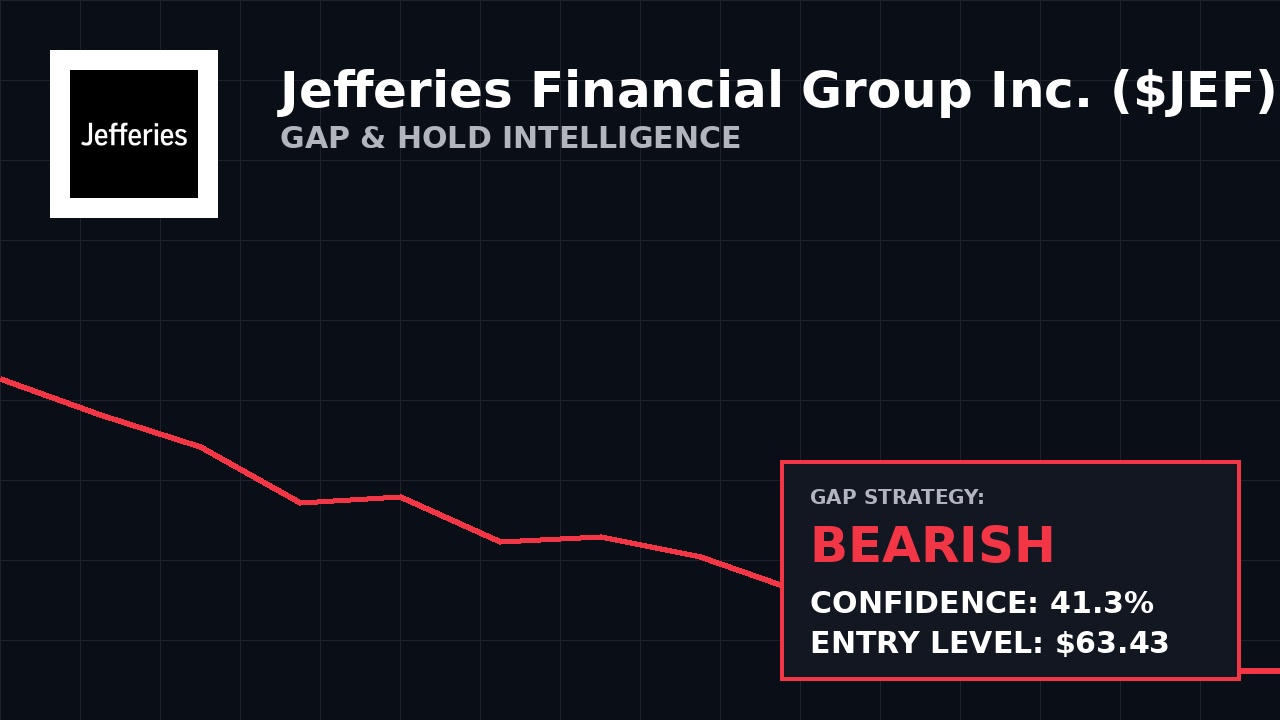
63.43 For Jefferies Financial Group Inc., the analysis suggests a bearish signal with high momentum and volume. The company’s technical indicators such as RSI and MACD are consistent with a bearish trend, indicating potential selling pressure at the open. Given this setup, initiating short positions with stops at J+5 levels seems prudent, with the potential for further declines post-gap.
71.07 For Commercial Metals Company, the technical indicators also lean bearish, with RSI at 0.0 and MACD favoring bears. This setup suggests a strong bearish signal, making it an attractive target for short positions. The recommendation is to consider shorting with stops at J+1 or J+2 levels, while hedging long positions in anticipation of further declines.
154.42 For TD SYNNEX Corporation, the analysis shows conflicting technical signals. While RSI is bullish, MACD is bearish, creating a mixed environment. This uncertainty makes it less straightforward to apply the ‘Gap and Hold’ strategy directly. However, oversold areas may present opportunities for defensive positioning, such as waiting for confirmation after the initial reaction.
The broader market context also plays a role in these decisions. Positive news events, such as Microsoft’s reinstatement or upgrades from top analysts, can create upward pressure, potentially countering bearish signals. Conversely, sector-specific factors, like Cardinal Health’s surge due to an improved specialty mix, may influence individual stocks differently.
Ultimately, the ‘Gap and Hold’ strategy requires careful consideration of both technical indicators and macroeconomic factors. Traders should monitor these positions closely, ensuring that stops are in place and that risk management guidelines are adhered to. The key takeaway is that while bearish signals dominate the data provided, the presence of conflicting trends and external news can lead to unpredictable market movements, necessitating a balanced approach to trading decisions.
Leave a Reply